7 Signs You Need Emergency Roof Repair Now
Your roof protects your home, family, and everything inside. Small warning signs can turn into major structural damage if you wait too long. Learn how to recognize the most urgent problems, what steps to take immediately, and when it’s time to call for emergency roof repair before repair costs climb.
Need help now? Schedule a fast emergency roof inspection with Pinkney Services, Washington, DC’s trusted woman-owned general contractor since 2012. Call (202) 681-5575 for immediate assistance.
What Are the Signs You Need Emergency Roof Repair?
A roof needs emergency repair when damage threatens your home’s structure or allows water inside. Common warning signs include active leaks, missing shingles, roof sagging, ceiling stains, daylight visible through the attic, granules collecting in gutters, and severe storm damage. Quick action limits repair costs and helps prevent structural failure.
Many roofing problems begin small, then worsen within days. Heavy rain, high winds, or falling branches can turn minor damage into expensive repairs. Knowing these signs that you need emergency roof repair helps you protect both your home and your budget.
Here are the 7 urgent roof repair warning signs every homeowner should know:
- Active roof leaks that drip during or after rain. Even a slow leak can damage insulation, drywall, wiring, and flooring.
- Missing or lifted shingles after strong winds. Exposed underlayment allows moisture to enter quickly.
- A sagging roof or uneven roofline. This often points to trapped moisture, weakened decking, or structural damage. Never ignore what causes roof sagging because it can become a serious safety hazard.
- Water stains on ceilings or walls. Brown rings, bubbling paint, or peeling drywall usually signal hidden roof leaks.
- Daylight visible inside the attic. If light gets through, rain, snow, and pests can enter through the same openings.
- Large amounts of granules in gutters. Asphalt shingles naturally shed small amounts over time, but excessive granules indicate your roof’s protective layer is wearing away.
- Visible storm damage. Hail dents, broken flashing, punctures from tree limbs, or debris impact all require immediate inspection.
Do not assume the damage will stay contained. Water often travels behind walls before becoming visible. By the time stains appear indoors, moisture may have already affected insulation, framing, or electrical systems.
If you notice even one of these urgent roof repair warning signs, schedule a professional inspection immediately. Fast action often means a simpler repair, lower costs, and far less disruption than waiting until the damage spreads.
How to Inspect for Roof Damage
You can often identify early problems without climbing onto your roof. A careful inspection from the ground and inside your home helps you spot roof leaks early while avoiding unnecessary risks. If you suspect major damage, leave the inspection to a professional roofer.
Use this checklist after severe weather or whenever you notice unusual signs inside your home.
| Inspection Area | What to Look For | Why It Matters |
| Ceilings & Walls | Water stains, peeling paint, damp spots | Often the first sign of hidden roof leaks |
| Attic Inspection | Daylight through roof boards, wet insulation, mold, musty odors | Reveals leaks before they reach living spaces |
| Roof (Ground View) | Missing shingles, lifted flashing, fallen branches, visible sagging | Indicates storm or structural damage |
| Gutters | Excessive granules in gutters, shingle pieces, debris buildup | Suggests aging shingles or impact damage |
| Roofline | Uneven or dipping sections | May indicate weakened decking or structural damage |
Safe Roof Inspection Checklist
- Walk around your property. Look for missing shingles, damaged flashing, or debris from a safe distance.
- Perform an attic inspection. Use a flashlight to check for moisture, mold, water stains, or visible daylight through the roof deck.
- Inspect ceilings and walls indoors. Watch for bubbling paint, discoloration, or fresh water stains after rain.
- Check your gutters. Large amounts of asphalt granules or roofing materials often signal advanced roof wear.
- Document everything. Take clear photos of visible damage. These images can help your contractor and support an insurance claim.
Never climb onto a wet, damaged, or unstable roof. Hidden weak spots can collapse without warning, especially after heavy storms. For additional guidance on staying safe during roof inspections, review FEMA’s roof safety tips before checking your property.
If your inspection reveals any warning signs, contact a qualified roofing professional immediately. A prompt evaluation can stop minor damage from becoming a costly emergency.
What to Do Before Help Arrives
Once you discover roof damage, your priority should be limiting additional loss while keeping everyone safe. Do not attempt major repairs yourself. Temporary measures can reduce water damage until a professional roofer arrives.
Follow these emergency steps:
- Move valuables away from the leak. Protect furniture, electronics, rugs, and important documents from dripping water.
- Catch leaking water. Place buckets or containers beneath active leaks, then use towels to absorb excess moisture and prevent slippery floors.
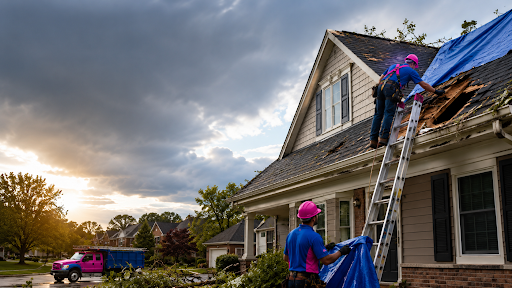
- Apply a temporary tarp if safe. Only do this from the ground or with professional assistance if conditions allow. Never climb onto a wet or storm-damaged roof.
- Document the damage. Take photos and videos of affected roofing, ceilings, walls, and personal belongings. Good documentation supports insurance claims.
- Turn off electricity if needed. If water is approaching outlets, fixtures, or your electrical panel, shut off power to the affected area and avoid contact with standing water.
- Call a roofing professional immediately. Fast response reduces structural damage and helps prevent mold growth.
Avoid using caulk or roofing cement as a permanent solution. These products may hide the problem without stopping water intrusion. A thorough inspection identifies the true source of the leak and ensures repairs address both visible and hidden damage.
If you need immediate assistance in Washington, DC, Pinkney Services provides fast emergency roof inspections, comprehensive damage assessments, and dependable repair solutions to help protect your home before conditions worsen.
When to Call a Roofer
Timing matters after roof damage. Waiting even a day or two can allow moisture to spread into insulation, drywall, framing, and electrical systems. Knowing when to call for roof repair can save thousands in future repairs.
Call a roofing professional immediately if you notice any of these conditions:
- Active leaks during or after rainfall.
- Missing shingles or flashing after high winds.
- A sagging roof or sections that appear uneven.
- Tree limbs or debris that have struck the roof.
- Hail damage that leaves cracked shingles or exposed underlayment.
- Large water stains spreading across ceilings or walls.
Storm damage deserves immediate attention, even if your roof appears intact from the ground. Wind can loosen shingles, break flashing, or create hidden openings that allow water inside. These issues often remain unnoticed until the next heavy rain.
A professional inspection also provides documentation that may support your insurance claim. The sooner damage is identified, the easier it becomes to prove the storm caused the problem.
If your roof has been affected by severe weather, learn more about our Storm Damage Roof Repair services to see how our team handles emergency inspections, temporary protection, and permanent repairs. Acting quickly helps protect your home, reduce repair costs, and prevent minor damage from becoming a major structural issue.
Emergency Roof Repair Costs & Insurance
The cost of emergency roof repair depends on the extent of the damage, roofing material, accessibility, and whether repairs are needed after business hours. Minor fixes typically cost far less than repairs delayed until water reaches the home’s structure.
Many homeowners insurance policies cover sudden and accidental damage caused by wind, hail, or fallen trees. However, damage resulting from neglected maintenance or normal wear is usually excluded. Review your policy carefully and report damage as soon as possible after a storm.
Take these steps to strengthen your claim:
- Photograph all visible damage before making temporary repairs.
- Prevent further damage with safe temporary measures, such as tarping if conditions allow.
- Contact your insurance provider promptly to open a claim.
- Schedule a professional inspection to document hidden damage and prepare a detailed repair estimate.
Emergency Roof Repair vs. Roof Replacement
| Service | Typical Cost Range | Best For |
| Emergency roof repair | $300 to $2,500 | Leaks, missing shingles, flashing damage, localized storm damage |
| Partial roof repair | $1,000 to $5,000 | Damage affecting one section of the roof |
| Full roof replacement | $8,000 to $20,000+ | Widespread damage, aging roofs, or severe structural issues |
A trusted contractor can also help you determine whether a repair is enough or if replacement offers better long-term value. At Pinkney Services, we perform thorough damage assessments, explain your options clearly, and provide documentation that supports roof insurance claims whenever covered damage is present.
For more guidance on the claims process, visit our Roof Insurance Claims page to learn how inspections, documentation, and contractor support can simplify your claim and help you restore your home faster.
Local Weather Risks and Roof Damage
Washington, DC, experiences strong thunderstorms, heavy rain, hail, high winds, and occasional winter snow. Each season can create new roofing problems, especially if your roof already has aging materials or minor damage. Small weaknesses often become serious roof leaks after severe weather.
Watch for these local weather risks:
- High winds that lift or remove shingles.
- Heavy rainfall that exposes hidden leaks and causes water damage.
- Hail that cracks shingles, dents flashing, and shortens roof life.
- Snow and ice that allow moisture to seep beneath roofing materials.
- Falling tree limbs during storms that puncture roofing systems.
After every major storm, inspect your property for visible damage and schedule a professional inspection if anything looks unusual. At Pinkney Services, our team understands the weather challenges homeowners face across Washington, DC. We identify hidden storm damage early, recommend the right repairs, and help prevent small problems from becoming expensive structural repairs.
Roof Maintenance Tips to Prevent Emergencies
Routine maintenance helps extend your roof’s lifespan and reduces the chance of unexpected repairs. A few simple inspections each year can uncover small issues before they become costly emergencies.
Use this quick maintenance checklist:
- Inspect your roof after major storms and high winds.
- Clean gutters regularly to prevent water backup and overflowing.
- Trim tree branches that hang over your roof.
- Check your attic for moisture, mold, or signs of leaks.
- Replace damaged shingles and repair loose flashing promptly.
- Schedule a professional roof inspection at least once each year.
Preventive care costs far less than emergency repairs. Staying proactive also makes it easier to catch hidden problems before they affect your home’s structure.
For additional guidance, review the National Roofing Contractors Association’s roof maintenance advice. You can also explore our Roof Maintenance Checklist blog for practical seasonal tips and inspection recommendations that help keep your roof in excellent condition.
FAQs: Emergency Roof Repair
What is considered a roofing emergency?
A roofing emergency is any damage that allows water into your home or creates a safety risk. Active roof leaks, a sagging roof, missing shingles after a storm, fallen tree limbs, or structural damage all require immediate attention from a professional roofer.
How fast should I act after discovering roof damage?
You should act as soon as possible. Even a small leak can spread behind walls, soak insulation, and weaken framing within hours. Scheduling an emergency inspection quickly helps reduce repair costs and limits additional damage.
Will homeowners insurance cover emergency roof repair?
Many policies cover sudden damage caused by wind, hail, or falling trees. Damage from age, poor maintenance, or normal wear is often excluded. Take clear photos, prevent further damage if it is safe to do so, and contact your insurance company promptly to begin the claims process.
Can I temporarily repair my roof myself?
You can reduce damage by placing buckets under leaks, moving valuables, and using a temporary tarp only if it can be done safely. Avoid climbing onto a wet or damaged roof. Permanent repairs should always be completed by a qualified roofing professional.
Don’t Let a Small Roof Problem Become a Major Disaster
Your roof rarely fails without warning. Active leaks, missing shingles, a sagging roof, ceiling stains, and storm damage are all signs that demand immediate attention. Acting quickly can prevent expensive water damage, protect your home’s structure, and improve the chances of a successful insurance claim.
When you need dependable emergency roof repair in Washington, DC, trust the experienced team at Pinkney Services. Since 2012, our woman-owned company has delivered honest assessments, quality craftsmanship, and responsive service for homeowners throughout the District. We thoroughly inspect hidden damage, explain your options clearly, and complete lasting repairs using premium materials.
If you suspect roof damage, don’t wait for the next storm to make it worse. Contact Pinkney Services today to schedule your emergency roof inspection. Call (202) 681-5575, visit https://pinkneyservices.com/, or reach out through our Contact Our Roofing Experts page. While planning your next step, explore our Roof Replacement vs. Repair blog to understand which solution best fits your home’s condition.