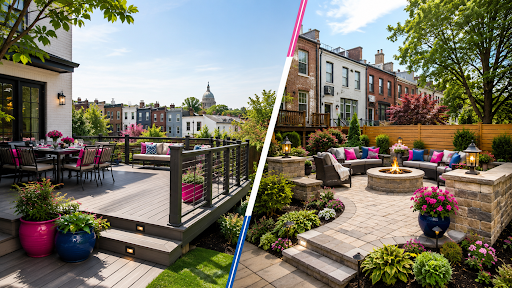
Deck vs. Patio: Best Choice for Washington, DC Homes
Choosing between a deck and a patio can have a major impact on your home’s value, appearance, and outdoor living experience. For Washington, DC homeowners, the decision goes beyond looks. Cost, ROI, permits, maintenance, climate, and yard conditions all play a role.
In this guide, you’ll learn how decks and patios compare in real DC conditions. We’ll cover installation costs, resale value, local permit requirements, weather performance, and design options to help you make the right choice for your property.
Explore our DC Building Permit Guide to start your project with confidence and avoid costly delays.
Deck vs Patio Cost and ROI in DC
When comparing a deck vs patio DC project, cost is often the first concern. Yet the upfront price tells only part of the story. Washington, DC, homeowners should also consider maintenance costs, resale value, and long-term return on investment.
In general, patios cost less to build. Decks often deliver a stronger visual appeal and can produce a higher perceived value, especially when attached to upper-level entrances or homes with sloped yards.
What’s Better for a Washington, DC Home, a Deck or Patio?
For most Washington, DC, homeowners, the best choice depends on the property. A deck works well on sloped lots and can increase usable living space above grade. A patio often costs less, requires less maintenance, and performs well on flat yards. Both can deliver strong ROI when professionally designed and built.
Deck vs Patio Cost Comparison DC
Several factors affect pricing:
- Size and layout
- Material selection
- Site preparation
- Drainage requirements
- Permit costs
- Accessibility to the project area
A simple ground-level patio usually requires less labor than an elevated deck. However, retaining walls, drainage systems, or premium pavers can quickly increase patio costs.
Decks often require structural framing, footings, railings, and inspections. These elements raise the initial investment but can create more usable space on challenging lots.
Deck vs Patio Comparison Table
| Factor | Deck | Patio |
| Typical Installation Cost | Higher | Lower |
| Best for Sloped Yards | Excellent | Often requires grading |
| Maintenance Needs | Moderate to High | Low to Moderate |
| Lifespan | 20-50+ years, depending on the material | 25-50+ years |
| ROI Potential | Strong | Strong |
| Permit Requirements | Usually required | Often simpler, varies by project |
| Installation Time | Longer | Shorter |
| Design Flexibility | Elevated and multi-level options | Ground-level living spaces |
Resale Value and ROI
Outdoor living remains one of the most desirable home improvements for buyers. A well-built outdoor space increases functionality and boosts curb appeal.
According to the National Association of Realtors Research and Statistics Center, outdoor improvement projects consistently rank among upgrades that improve homeowner satisfaction and resale appeal. Buyers often view outdoor entertainment areas as an extension of the home’s living space.
For Washington, DC properties, ROI often depends on:
- Neighborhood expectations
- Home style
- Lot size
- Quality of construction
- Material selection
- Overall outdoor design
Row homes in neighborhoods like Georgetown, Shaw, Capitol Hill, and LeDroit Park often benefit from thoughtfully designed patios that maximize limited outdoor space. Larger detached homes may see stronger returns from elevated decks that connect directly to interior living areas.
Which Option Delivers Better Value?
A patio often wins on pure cost efficiency. Homeowners typically spend less up front while gaining a durable outdoor space.
A deck may provide greater lifestyle value when:
- Your yard slopes significantly
- You want elevated views
- Your main living area sits above grade
- You want direct access from a second-story door
At Pinkney Services, we help DC homeowners evaluate cost, usability, and long-term ROI before construction begins. With more than a decade of experience building decks and patios throughout Washington, DC, our team ensures each project aligns with your property’s layout, budget, and future resale goals.
For many homeowners, the highest return comes from choosing the option that fits the home, not simply the one with the lowest initial price.
DC Climate and Terrain: What Works Best?
Washington, DC’s climate can be tough on outdoor structures. Hot, humid summers, frequent rain, and winter freeze-thaw cycles all affect how long a deck or patio lasts. Before choosing between a deck and a patio, it’s important to understand how local conditions impact performance.
How DC Weather Affects Decks and Patios
DC experiences significant temperature swings throughout the year. Moisture expands and contracts materials, which can lead to cracking, shifting, or warping over time.
For decks, the biggest challenges include:
- Summer humidity
- UV exposure
- Moisture buildup
- Freeze-thaw movement around footings
Wood decking requires consistent maintenance to prevent rot, mildew, and weather damage. Composite decking performs better against moisture and temperature changes, making it one of the best materials for DC decks and patios when low maintenance is a priority.
Patios face different challenges. Improper installation can lead to:
- Surface cracking
- Paver shifting
- Water pooling
- Drainage problems
A properly prepared base helps prevent these issues and extends the lifespan of the patio.
Sloped Yard DC: Deck or Patio?
Terrain often determines the better option.
If your property has a steep slope, a deck usually makes more sense. Elevated framing allows builders to create a level outdoor living space without extensive excavation.
This makes a deck vs patio for a sloped yard DC comparison relatively straightforward.
A deck is often the better choice when:
- The yard drops sharply from the home
- You want elevated views
- Major grading would be expensive
- Drainage issues already exist
Patios perform best on flatter lots where excavation and grading remain minimal.
Drainage Matters More Than Most Homeowners Realize
Poor drainage is one of the most common causes of outdoor project failure in Washington, DC.
Heavy rain can quickly create problems if water is not directed away from the home and outdoor living area.
Key drainage considerations include:
Proper site grading
Permeable paver options
Downspout management
Drainage channels were needed
Erosion control on sloped properties
At Pinkney Services, every deck and patio project begins with a thorough site evaluation. Our team assesses grading, drainage patterns, soil conditions, and long-term weather exposure before recommending a solution.
The Best Choice for DC Conditions
For flat lots with good drainage, a patio often provides excellent durability and lower maintenance.
For challenging terrain, elevated entrances, or significant slopes, a deck typically delivers better functionality and easier installation.
The best investment is not simply choosing a deck or patio. It’s choosing the option that works with your property’s terrain, drainage conditions, and Washington, DC’s demanding climate.
Permits and Installation in Washington, DC
Before building a deck or patio, Washington, DC, homeowners should understand the city’s permit and zoning requirements. Skipping this step can lead to costly delays, failed inspections, or even removal orders.
The good news is that planning helps keep your project on schedule and compliant with local regulations.
Do You Need a Permit for a Deck in Washington, DC?
In many cases, yes.
Most elevated decks require permits because they involve structural components, footings, guardrails, and building code compliance. The exact requirements depend on factors such as:
- Deck height
- Square footage
- Property setbacks
- Historic district regulations
- Structural attachments to the home
Homeowners should review requirements through the DC Department of Buildings and consult a local contractor familiar with permits for decks in Washington, DC.
For a deeper breakdown, visit our DC Building Permit Guide.
What About Patios?
Patios often involve fewer permitting requirements because they are typically ground-level structures.
However, permits may still be required when projects include:
- Retaining walls
- Drainage modifications
- Large grading changes
- Outdoor kitchens
- Covered structures
- Utility relocations
Never assume a permit is unnecessary. Local zoning rules and property conditions can affect approval requirements.
Understanding DC Zoning and Building Codes
Washington, DC, enforces zoning regulations that may impact outdoor projects.
Common considerations include:
- Property line setbacks
- Lot coverage limits
- Historic preservation requirements
- Stormwater management rules
- Accessibility requirements
This is especially important in neighborhoods such as Georgetown, Capitol Hill, Shaw, Adams Morgan, and LeDroit Park, where additional approvals may apply.
Understanding DC deck permit requirements before design begins helps avoid costly redesigns later.
DIY vs Professional Installation
Many homeowners wonder whether they should tackle a deck or patio project themselves.
DIY may work for:
- Small paver patios
- Simple landscape upgrades
- Decorative hardscape features
Professional installation is usually the better choice for:
- Elevated decks
- Multi-level outdoor spaces
- Projects requiring permits
- Complex drainage solutions
- Structural framing and footings
Mistakes during installation can create safety risks and increase long-term maintenance costs.
Why Professional Planning Matters
At Pinkney Services, we manage the entire process from design and permitting to construction and final inspections. Our team understands local building codes, zoning requirements, and permit procedures throughout Washington, DC.
That means homeowners receive:
Permit guidance from day one
Accurate project planning
Professional installation
Code-compliant construction
Clear communication throughout the project
As Washington, DC’s trusted woman-owned general contractor since 2012, Pinkney Services helps homeowners avoid permit headaches while creating outdoor spaces built to last.
Ready to start? Contact our team at (202) 681-5575 or visit https://pinkneyservices.com to discuss your deck or patio project.
Materials and Maintenance: What to Expect
The materials you choose will have a major impact on appearance, durability, maintenance, and long-term costs. In Washington, DC’s humid summers and freeze-thaw winters, selecting weather-resistant materials can save thousands in future repairs.
When evaluating a deck vs patio, it’s important to look beyond installation costs and consider ongoing maintenance requirements.
Composite Decking vs Traditional Wood
Composite decking has become one of the most popular options for DC homeowners.
Unlike traditional wood, composite boards resist:
- Rot
- Moisture damage
- Insect infestations
- Splintering
- Fading
Manufacturers such as Trex and TimberTech offer products specifically designed for harsh outdoor environments.
Benefits of Composite Decking
Low maintenance
Long lifespan
Moisture resistance
Minimal annual upkeep
Wide range of colors and finishes
Traditional pressure-treated lumber often costs less upfront but requires:
- Regular sealing
- Staining
- Board replacement
- Mold and mildew prevention
For homeowners seeking low upkeep, composite remains one of the best materials for DC decks and patios.
For a deeper comparison, visit our Composite Decking Pros and Cons guide.
Paver Patios: Durable and Versatile
Paver patios remain one of the most popular patio options in Washington, DC.
Modern paver systems offer:
- Excellent durability
- Strong drainage performance
- Easy repairs
- Flexible design options
Manufacturers such as Belgard provide a wide variety of colors, textures, and patterns that complement both historic DC row homes and modern residences.
Unlike poured concrete, individual pavers can often be replaced without rebuilding the entire surface.
Low-Maintenance Patio Ideas DC Homeowners Love
Many homeowners choose patios because maintenance is relatively simple.
Common low-maintenance features include:
Permeable pavers for improved drainage
Decorative stone borders
Built-in seating walls
Outdoor lighting systems
Native landscaping around hardscape areas
These upgrades improve usability while reducing long-term upkeep.
Fire Pit Integration
A fire pit can dramatically increase the functionality of an outdoor space.
Patios typically provide the easiest integration because of their non-combustible surfaces. Popular fire pit options include:
- Gas fire pits
- Wood-burning fire pits
- Built-in seating areas
- Outdoor entertainment zones
Decks can also accommodate fire features, but additional safety requirements may apply depending on the material and design.
Annual Maintenance Comparison
| Maintenance Task | Composite Deck | Wood Deck | Paver Patio |
| Cleaning | 1-2 times per year | Multiple times per year | 1-2 times per year |
| Sealing Required | No | Yes | Occasionally |
| Board/Paver Repairs | Rare | Moderate | Easy spot repairs |
| Mold Resistance | High | Moderate | High |
| Weather Resistance | Excellent | Moderate | Excellent |
Which Material Offers the Best Long-Term Value?
For homeowners prioritizing minimal upkeep, composite decking and paver patios typically offer the strongest long-term value.
Composite decks provide elevated outdoor living with limited maintenance. Paver patios deliver exceptional durability, flexibility, and drainage performance.
At Pinkney Services, we help homeowners select materials based on budget, lifestyle, maintenance preferences, and property conditions. Our certified installation team uses premium products designed to withstand Washington, DC’s climate while maximizing beauty and longevity.
The right material choice today can reduce maintenance costs and protect your investment for decades.
Design Inspiration: Decks, Patios, and Combos
The best outdoor spaces do more than look good. They create a natural extension of your home. Whether you choose a deck, a patio, or a combination of both, thoughtful design can improve comfort, increase property value, and maximize outdoor living in Washington, DC.
Popular Outdoor Living Trends in DC
Homeowners across Georgetown, Shaw, Capitol Hill, Adams Morgan, and Anacostia are investing in outdoor spaces that function like additional living rooms.
Popular features include:
- Built-in seating
- Outdoor kitchens
- Covered entertaining areas
- Integrated lighting
- Fire pit gathering spaces
- Multi-level layouts
- Privacy screens and landscaping
These additions make outdoor areas more usable throughout the year while improving overall curb appeal.
For more inspiration, explore our Outdoor Living Design Ideas page.
You can also browse outdoor design galleries from HGTV Outdoors and This Old House Deck Resources.
Deck, Patio, or Both?
Many homeowners assume they must choose one or the other. In reality, combining a deck and patio often creates the most functional design.
For example:
Upper-Level Deck
↓
Stairs
↓
Ground-Level Patio
↓
Fire Pit and Seating Area
This approach works especially well on sloped lots where multiple outdoor zones improve traffic flow and usability.
Simple Decision Flowchart
Is your yard sloped?
│
Yes ──► Consider a Deck
│
No
│
Do you want the lowest maintenance?
│
Yes ──► Consider a Patio
│
No
│
Need elevated access from the home?
│
Yes ──► Deck
│
No
│
Want maximum entertaining space?
│
Yes ──► Deck + Patio Combo
Recommended Visuals for This Page
Before-and-after deck transformations
Patio renovation projects in DC row homes
Deck-and-patio combination projects
Fire pit entertainment areas
Drainage and grading solutions on sloped lots
Use project photography from Pinkney Services’ website and Google Business Profile to showcase real local work and build trust with homeowners.
Smart Design Starts With the Property
A beautiful outdoor space should fit the home’s architecture, lot size, and drainage conditions.
At Pinkney Services, every project begins with a detailed site evaluation. Our team designs decks and patios that complement the property while addressing practical concerns like drainage, traffic flow, privacy, and long-term maintenance.
The result is an outdoor space that looks great today and performs well for years to come.
Step-by-Step Project Planning Checklist
A successful outdoor project starts long before construction begins. Whether you’re building a deck, patio, or combination space, a clear plan helps prevent delays, budget overruns, and permit issues.
Use this checklist to guide your deck or patio in Washington, DC, from concept to completion.
1. Define Your Goals
Start by identifying how you’ll use the space.
Ask yourself:
- Will you entertain guests?
- Do you want a fire pit or an outdoor kitchen?
- Is dining or relaxing the priority?
- How many people should the space accommodate?
- Do you need shade or privacy features?
The answers will help determine whether a deck, patio, or hybrid design makes the most sense.
2. Establish a Realistic Budget
Your budget should include more than construction costs.
Plan for:
- Design and planning
- Permits and inspections
- Site preparation
- Drainage improvements
- Lighting and landscaping
- Furniture and accessories
Setting expectations early helps avoid surprises later.
3. Evaluate Your Property
Every yard has unique conditions.
Review:
Slope and grading
Drainage patterns
Existing structures
Utility locations
Property line setbacks
A professional site assessment can identify challenges before work begins.
4. Research Permits and Building Requirements
Before finalizing your design, confirm whether permits are required.
Review:
- DC zoning regulations
- Building codes
- Historic district requirements
- Stormwater management rules
Our DC Building Permit Guide can help you understand the process.
5. Choose Materials Carefully
Material selection affects both appearance and maintenance.
Popular DC choices include:
- Composite decking
- Pressure-treated lumber
- Concrete pavers
- Natural stone
- Permeable paver systems
Choose materials that fit your budget, lifestyle, and maintenance preferences.
6. Decide Between DIY and Professional Installation
Some homeowners can handle small patio projects themselves.
However, professional installation is usually recommended for:
- Elevated decks
- Structural framing
- Drainage solutions
- Permit-required projects
- Multi-level outdoor spaces
Working with experienced contractors helps protect your investment.
7. Select the Right Contractor
Before hiring, verify:
- Licensing and insurance
- Local project experience
- Reviews and references
- Permit knowledge
- Written project timelines
Pinkney Services provides a single point of contact throughout design, permitting, and construction, helping homeowners stay informed every step of the way.
8. Build and Enjoy
Once permits are approved and materials arrive, construction can begin.
Conduct a final walkthrough, review maintenance recommendations, and enjoy your new outdoor living space knowing it was planned correctly from day one.
FAQs: Decks and Patios in DC
Can I Build a Deck or Patio Myself?
Yes, some homeowners successfully complete small patio projects as a DIY project.
DIY may work for:
- Small paver patios
- Gravel seating areas
- Basic landscaping improvements
However, professional installation is usually recommended for:
- Elevated decks
- Structural framing
- Permit-required projects
- Complex drainage systems
- Multi-level outdoor spaces
Mistakes can lead to safety concerns, drainage issues, and costly repairs.
Which Option Works Best for DC Row Homes?
For many DC row homes, patios are often the most practical solution because outdoor space is limited.
A paver patio can:
- Maximize usable yard space
- Require less maintenance
- Create an attractive entertainment area
- Support features like seating walls and fire pits
That said, some row homes benefit from elevated decks when access from the home’s rear level makes a raised structure more functional.
How Do I Maintain a Deck in DC?
Maintenance depends on the material.
Wood Decks
- Clean annually
- Seal or stain every few years
- Inspect for rot and loose fasteners
Composite Decks
- Wash periodically
- Remove debris from gaps
- Inspect railings and hardware
Composite materials typically require less upkeep in DC’s humid climate.
Which Lasts Longer: A Deck or Patio?
A properly installed deck or patio can last for decades.
Generally:
- Composite decks often last 25-50+ years
- Quality paver patios can last 30-50+ years
- Lifespan depends heavily on installation quality and maintenance
Do All Decks Require Permits in Washington, DC?
Most elevated decks require permits and inspections. Ground-level projects may have different requirements depending on size and scope.
Always verify requirements through local authorities before beginning construction.
Ready to Build the Perfect Outdoor Living Space?
Whether you’re leaning toward a deck, patio, or a custom combination of both, the right choice starts with expert guidance. A professionally planned outdoor space can increase your home’s value, improve daily living, and stand up to Washington, DC’s demanding climate for decades.
At Pinkney Services, we help homeowners across Georgetown, Capitol Hill, Shaw, Adams Morgan, Anacostia, and surrounding DC neighborhoods navigate every step of the process, from design and permitting to construction and final inspection. Our team brings more than a decade of trusted local experience and a commitment to craftsmanship that shows in every project we complete.
Why Washington, DC, Homeowners Choose Pinkney Services
Woman-Owned General Contractor Since 2012
25+ Years of Construction Expertise
Licensed, Insured, and Code-Compliant
Deck and Patio Design-Build Specialists
Permit and Project Management Support
Premium Materials and Professional Installation
Transparent Communication From Start to Finish
Financing Available for Qualified Homeowners
Schedule Your Free Consultation Today
Ready to transform your backyard into a space you’ll enjoy for years to come?
Contact Pinkney Services today for a free consultation and personalized recommendation for your Washington, DC, property.
(202) 681-5575
https://pinkneyservices.com
200 Massachusetts Ave NW, Washington, DC 20001
Pinkney Services
Washington, DC’s Trusted Woman-Owned General Contractor Since 2012