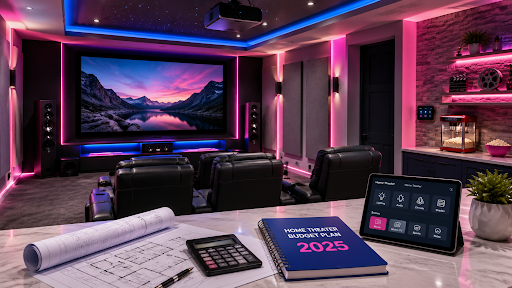
Home Theater Installation Cost 2026: Full Price Guide
See what a home theater costs in 2026, including real installation prices and budgeting tips before you start your project.
Whether you’re building a simple surround sound setup or a full media room, understanding home theater installation cost in 2026 helps you plan smarter and avoid surprise expenses. Prices depend on equipment quality, room size, labor, wiring, acoustics, and smart home features.
Most homeowners spend $4,000 to $30,000 on a professional setup. Basic systems are more affordable, while high-end theaters with laser projectors, Dolby Atmos, luxury seating, and automation can reach $75,000–$100,000+.
If your project involves electrical work, framing, drywall, or custom built-ins, an experienced contractor can help keep everything on budget. Companies like Pinkney Services, a trusted Washington, DC general contractor since 2012, often handle prep work before AV installation.
Get a free local quote and compare installation prices before you build.
2026 Home Theater Installation Cost Overview
Snippet Answer: What is the average cost to install a home theater in 2026?
The average home theater installation cost in 2026 ranges from $4,000 to $30,000+, depending on equipment quality, room size, labor rates, construction requirements, and customization. Entry-level systems may cost under $5,000, while dedicated theater rooms with premium speakers, laser projectors, acoustic treatments, and smart automation frequently exceed $60,000, with luxury installations surpassing $100,000.
The final investment involves much more than purchasing a television or projector. Professional wiring, seating, room preparation, lighting controls, networking, and installation labor all contribute to the overall budget.
Most homeowners typically fall into one of four pricing categories.
| Home Theater Type | Typical 2026 Cost Range | Best For |
| DIY Basic Setup | $1,200 – $4,500 | Apartments, condos, renters |
| Entry-Level Professional Installation | $4,000 – $9,000 | Family rooms and casual entertainment spaces |
| Mid-Range Dedicated Theater | $9,000 – $30,000 | Homeowners seeking premium performance |
| Luxury Custom Theater | $30,000 – $120,000+ | Fully customized cinema rooms |
Industry estimates continue to show that professional installation typically accounts for 10%–30% of the total project cost, while equipment remains the largest expense. Premium speakers, laser projectors, acoustically transparent screens, integrated lighting, and smart home controls significantly increase overall pricing.
See current national averages from Angi.
For homeowners in Washington, DC, installation costs generally remain above national averages because of higher labor rates, permit requirements, and construction costs. Projects involving framing, electrical work, drywall finishing, or custom millwork often benefit from experienced contractors like Pinkney Services, who coordinate renovation work before specialized AV installation begins.
One lesson continues to hold true in 2026: defining your goals before buying equipment often saves thousands of dollars. A carefully planned $10,000 theater frequently delivers a better overall experience than a poorly designed $25,000 installation.
Home Theater Cost Breakdown
Understanding the home theater installation cost breakdown for 2026 helps you create a realistic budget before purchasing equipment. Displays and speakers represent only part of the investment. Labor, room preparation, wiring, electrical upgrades, acoustics, and future maintenance also influence the final price.
Major Cost Factors
Equipment Quality
Audio and video equipment still account for the largest share of the budget.
Typical equipment pricing in 2026 includes:
- TV or projector: $700–$12,000+
- Surround sound system: $500–$18,000+
- Projection screen: $300–$6,000+
- AV receiver: $400–$4,000+
- Smart lighting controls: $300–$3,000+
Higher-end equipment delivers superior picture quality, immersive sound, better reliability, and a longer service life.
Labor Rates
Professional installation pricing varies by region and project complexity.
Typical labor costs include:
- Equipment installation: $700–$3,000
- Projector mounting: $400–$1,800
- Speaker installation: $150–$600 per speaker
- Hidden wiring and cable management: $700–$4,000+
Major metropolitan areas including Washington, DC, New York, Boston, San Francisco, and Seattle continue to command some of the nation’s highest labor rates.
Room Size and Layout
Larger spaces generally require:
- Additional speakers
- Longer wiring runs
- Larger displays
- More acoustic treatment
- Additional subwoofers
As room size increases, both labor and material costs increase accordingly.
Acoustic Treatment
Acoustics remain one of the best investments homeowners can make.
Typical pricing includes:
- Acoustic wall panels: $700–$6,000+
- Soundproofing: $1,500–$18,000+
- Bass traps and specialty treatments: $500–$4,000+
Proper acoustic treatment dramatically improves dialogue clarity, bass response, and overall listening quality.
Smart Home Automation
Modern home theaters increasingly integrate with whole-home automation systems.
Popular upgrades include:
- Voice control
- Smart lighting
- Motorized blackout shades
- Climate automation
- Universal remote systems
These features generally add $1,500–$12,000+ to the total project cost.
Hidden Costs and Savings
Many homeowners budget only for equipment while overlooking smaller expenses that can significantly affect the final investment.
Common Hidden Costs
- Hidden in-wall wiring
- Electrical panel upgrades
- Dedicated electrical circuits
- Permit fees
- Furniture delivery
- Equipment warranties
- Extended protection plans
- Home insurance adjustments
- Network upgrades for streaming devices
Before construction begins, homeowners should also review local building permit requirements and renovation guidelines.
Projects involving structural changes, electrical improvements, custom cabinetry, drywall modifications, or framing generally benefit from experienced contractors. Throughout the Washington, DC area, Pinkney Services helps homeowners prepare theater spaces by managing permitting, remodeling, and construction work before AV systems are installed.
Cost Breakdown by Category
| Category | Typical 2026 Cost Range | Percentage of Budget |
| Video Equipment | $1,200 – $18,000+ | 25–40% |
| Audio Equipment | $700 – $18,000+ | 20–35% |
| Professional Labor | $700 – $10,000+ | 10–30% |
| Hidden Wiring | $700 – $4,000 | 5–10% |
| Seating | $800 – $12,000+ | 5–20% |
| Acoustic Treatment | $700 – $18,000+ | 5–20% |
| Smart Automation | $1,500 – $12,000+ | 5–15% |
| Annual Maintenance | $150 – $1,200 | Ongoing |
Creating a detailed budget before construction begins reduces costly surprises later. Most homeowners achieve the best value by prioritizing quality audio equipment, professional wiring, and proper room acoustics before investing in luxury upgrades.
Related: DIY vs. Professional Installation
DIY vs. Professional Installation
Many homeowners wonder whether they should install a home theater themselves or hire a professional. The right choice depends on your budget, technical experience, and the complexity of your project.
A simple surround sound system or wall-mounted TV can often be installed without professional help. However, dedicated theater rooms with hidden wiring, projector mounting, in-wall speakers, acoustic treatments, and smart home integration usually benefit from expert installation.
DIY Home Theater Installation
Pros
- Lower upfront costs
- Complete control over equipment selection
- Flexible installation schedule
- Suitable for basic TV and speaker setups
Cons
- Greater chance of wiring mistakes
- Longer installation time
- Limited calibration tools
- Potential electrical safety concerns
- No workmanship warranty
Most DIY installations cost between $1,200 and $4,500, depending on equipment and room size. While labor costs are lower, mistakes can become expensive if wiring or equipment placement needs to be corrected later.
Professional Home Theater Installation
Pros
- Expert equipment placement
- Clean cable management
- Professional audio and video calibration
- Faster project completion
- Labor warranty and ongoing support
Cons
- Higher initial investment
- Scheduling depends on installer availability
- Custom work increases overall costs
Professional installation remains the best option for projects involving projector systems, in-wall speakers, hidden wiring, smart automation, lighting integration, or room remodeling.
For Washington, DC homeowners, installation projects often require coordination between electricians, general contractors, and AV specialists. Companies like Pinkney Services help manage framing, drywall, permitting, and electrical upgrades before theater equipment is installed.
Cost Comparison
| Project Type | DIY Cost | Professional Cost |
| Basic TV & Soundbar | $1,200–$2,800 | $1,800–$4,500 |
| 5.1 Surround Sound | $2,500–$5,500 | $4,000–$9,000 |
| Projector System | $3,000–$9,000 | $5,000–$14,000 |
| Dedicated Theater Room | $6,000–$25,000 | $9,000–$60,000+ |
| Luxury Custom Theater | Rarely DIY | $30,000–$120,000+ |
DIY projects save money by eliminating labor costs, but professional installers often deliver better overall performance through accurate speaker placement, room calibration, and seamless system integration.
For planning inspiration and layout ideas, visit Audio Advice’s Home Theater Designer.
Related: Home Theater Projector Guide
Regional Cost Comparisons
Where you live plays a major role in determining home theater installation cost in 2026. Labor rates, permit fees, contractor demand, and material pricing vary widely across the country.
Large metropolitan areas generally have the highest installation costs due to increased labor rates and stricter building requirements. Smaller cities and rural areas often offer lower labor costs but may have fewer specialized home theater installers available.
Projects involving remodeling, soundproofing, or custom construction are frequently priced using a cost-per-square-foot model alongside equipment pricing.
Sample Home Theater Installation Costs by Region
| Region | Basic Setup | Mid-Range Theater | Luxury Theater |
| Northeast (NY, NJ, MA) | $4,500–$9,000 | $12,000–$35,000 | $40,000–$120,000+ |
| Mid-Atlantic (DC, MD, VA) | $5,000–$10,000 | $13,000–$38,000 | $45,000–$130,000+ |
| Southeast | $3,500–$8,000 | $9,000–$28,000 | $35,000–$95,000+ |
| Midwest | $3,500–$7,000 | $9,000–$25,000 | $30,000–$85,000+ |
| West Coast | $5,500–$11,000 | $16,000–$45,000 | $55,000–$160,000+ |
Homeowners in Washington, DC should expect to budget above national averages because of elevated labor costs and permitting requirements. If your project involves electrical upgrades, framing, drywall finishing, or custom millwork, a contractor like Pinkney Services can help coordinate construction while keeping the project organized and on schedule.
Step-by-Step Installation Timeline & Checklist
A successful home theater starts with proper planning. While a simple installation may take only one day, a fully customized theater room involving remodeling, hidden wiring, and automation can require several weeks.
Following a structured process reduces delays, controls costs, and minimizes expensive changes during construction.
Home Theater Installation Timeline
1. Set Your Budget and Goals
Determine how you’ll use your theater.
- Movies
- Sports
- Gaming
- Music
- Multi-purpose entertainment
Establish a realistic budget before purchasing equipment.
2. Design the Room
Plan the ideal layout for:
- Screen placement
- Seating locations
- Speaker positioning
- Lighting control
Dedicated theater rooms should include acoustic planning and soundproofing during this stage.
3. Choose Your Equipment
Select components that match your budget and performance goals.
- Television or projector
- AV receiver
- Speakers
- Streaming devices
- Smart home controls
4. Complete Construction and Wiring
Depending on the project, this stage may include:
- Hidden wiring
- Electrical upgrades
- Framing
- Drywall installation
- Custom cabinetry
- Paint and finish work
Many Washington, DC homeowners work with Pinkney Services to handle remodeling, permitting, and construction before AV equipment is installed.
5. Install and Calibrate Equipment
Professional calibration optimizes:
- Speaker balance
- Surround sound performance
- Projector alignment
- Screen image quality
- Smart home integration
6. Test the System
Verify every component before the project is complete.
Home Theater Installation Checklist
- Establish your project budget
- Measure room dimensions
- Select equipment
- Verify electrical capacity
- Plan cable routes
- Review permit requirements
- Schedule contractors
- Complete calibration
- Register warranties
- Plan future upgrades
Related: Home Theater Room Design Tips
Planning each phase before construction begins helps prevent delays, minimizes budget overruns, and creates a better long-term entertainment experience.
Ongoing Costs: Energy, Insurance & Maintenance
Many homeowners focus on installation costs but overlook the ongoing expenses of owning a home theater. Fortunately, annual operating costs are relatively modest compared to the initial investment. Factoring them into your budget helps protect your equipment and keeps your system performing at its best.
The most common recurring expenses include electricity, streaming subscriptions, maintenance, equipment protection, and insurance.
Typical Annual Home Theater Costs
| Expense Category | Monthly Cost | Annual Cost |
| Electricity | $15–$60 | $180–$720 |
| Streaming Services | $20–$120+ | $240–$1,440+ |
| Equipment Maintenance | $15–$50 | $180–$600 |
| Insurance Increase | $5–$30 | $60–$360 |
| Projector Replacement Fund | $5–$25 | $60–$300 |
| Smart Home Support | $0–$40 | $0–$480 |
Energy Costs
Large televisions, projectors, amplifiers, receivers, and powered subwoofers consume more electricity than a standard entertainment setup.
Your monthly energy costs depend on:
- Screen size
- Equipment efficiency
- Daily usage
- Local utility rates
Modern LED televisions generally use less electricity than high-brightness projectors, while laser projectors typically require less maintenance than traditional lamp-based models.
Insurance Considerations
High-end home theater systems can add significant value to your property. Contact your homeowner’s insurance provider to verify coverage for premium electronics, custom installations, and built-in equipment.
Theaters valued above $20,000 may require increased coverage limits or additional riders.
Maintenance Costs
Routine maintenance extends equipment life and protects your investment.
Recommended maintenance includes:
- Cleaning projector filters
- Removing dust from electronics
- Inspecting speaker connections
- Testing cables
- Updating firmware
- Checking smart home integrations
Most homeowners spend between $400 and $2,500 annually, depending on equipment quality, system complexity, and streaming subscriptions. A small maintenance budget today can help prevent expensive repairs or premature replacement later.
Related: Home Theater Maintenance Checklist
Upgrades, Home Value & Return on Investment
A professionally designed home theater offers more than entertainment. It can improve everyday living, increase buyer interest, and make your home stand out in a competitive market.
Although a home theater rarely delivers a dollar-for-dollar financial return like a kitchen remodel, well-planned upgrades often improve perceived home value and marketability.
The best return comes from investing in features that appeal to most homeowners rather than overspending on specialty upgrades.
High-Value Home Theater Upgrades
Smart Home Integration
Smart home technology continues to become a standard feature in modern renovations.
Popular upgrades include:
- Voice-controlled entertainment
- Automated lighting scenes
- Motorized blackout shades
- Smart thermostats
- Mobile app control
- Universal remote systems
These upgrades improve convenience while creating a premium viewing experience.
Premium Surround Sound
Audio quality often has a greater impact than upgrading to a larger television.
Popular configurations include:
- 5.1 Surround Sound
- 7.1 Surround Sound
- Dolby Atmos
- Multi-zone audio
Proper speaker placement and professional calibration maximize every dollar invested.
Projector & Screen Upgrades
Dedicated theater rooms benefit significantly from projector improvements.
Popular upgrades include:
- Native 4K projectors
- Laser projectors
- Acoustically transparent screens
- Fixed-frame screens
- Larger viewing surfaces
Many homeowners prioritize projector upgrades because they deliver the closest experience to a commercial cinema.
Does a Home Theater Increase Home Value?
A dedicated home theater generally adds lifestyle value more than direct resale value. However, in higher-end neighborhoods, professionally designed entertainment spaces can increase buyer interest and help differentiate a home from competing listings.
For current remodeling return-on-investment data, review Remodeling Magazine’s annual Cost vs. Value Report.
Homeowners planning a dedicated theater often achieve the best results by combining the project with a larger basement remodel, home addition, or whole-home renovation. In the Washington, DC area, Pinkney Services helps homeowners incorporate theater rooms into broader remodeling projects while ensuring electrical systems, framing, and finishes support future technology upgrades.
A thoughtfully planned $20,000 theater often delivers greater everyday enjoyment and stronger buyer appeal than an overbuilt six-figure installation with features few homeowners will fully use.
Frequently Asked Questions
How much does a home theater installation cost in 2026?
Most professionally installed home theaters cost between $4,000 and $30,000. Basic DIY systems may cost around $1,200, while luxury custom theaters with premium equipment and automation can exceed $120,000.
How long does installation take?
Simple television and surround sound installations often finish within one day. Dedicated theater rooms requiring remodeling, electrical work, acoustic treatments, and custom finishes generally take two to eight weeks.
Can I upgrade my home theater later?
Yes. Many homeowners begin with a basic system and upgrade over time by adding premium speakers, larger displays, improved acoustics, or smart home automation. Planning for future expansion during the initial installation usually reduces upgrade costs.
What is the most affordable surround sound option?
A quality soundbar paired with a wireless subwoofer remains the most budget-friendly solution. Entry-level 5.1 surround sound systems also provide excellent value for homeowners seeking a more immersive experience.
Do I need permits to install a home theater?
Equipment installation alone rarely requires permits. However, electrical upgrades, structural modifications, new walls, or extensive remodeling often require local permits. Always verify requirements before beginning construction.
Is professional installation worth the cost?
For projects involving projector systems, hidden wiring, custom cabinetry, smart automation, or remodeling, professional installation often provides better performance, cleaner finishes, improved reliability, and greater long-term value.
Build Your Dream Home Theater with Confidence
Understanding home theater installation cost in 2026 begins with knowing what drives the budget. Equipment quality, labor, room size, wiring, acoustics, automation, and long-term maintenance all influence the final investment.
Most homeowners spend between $4,000 and $30,000 for a professionally installed home theater, while luxury custom theaters can exceed $100,000. Careful planning, realistic budgeting, and investing in the right features will deliver the best long-term value.
Before starting your project:
- Compare multiple installation quotes
- Define your must-have features
- Budget for hidden wiring and future upgrades
- Consider ongoing maintenance and energy costs
- Hire experienced professionals for remodeling and structural work
If your project includes electrical upgrades, custom cabinetry, room remodeling, framing, drywall, or permitting, partnering with an experienced contractor helps keep everything organized from start to finish.
Why Homeowners Choose Pinkney Services
For more than a decade, Pinkney Services has helped homeowners throughout Washington, DC, transform their homes through expert remodeling, construction, and project management. Founded by Antoinette Pinkney, this trusted woman-owned general contracting company brings more than 25 years of industry experience to every project.
Whether you’re converting a basement into a dedicated home theater, remodeling an entertainment room, or planning a larger renovation, Pinkney Services delivers quality craftsmanship, clear communication, and dependable project coordination.
- 5-Star Rated Contractor
- Featured on NBC, CBS, FOX & 100+ News Outlets
- Transparent Project Management
- Dedicated Point of Contact
- Financing Available for Qualified Projects
Request Your Free Quote Today
Ready to create the ultimate home entertainment experience?
Whether you’re building a dedicated theater room or remodeling an existing space, Pinkney Services can help bring your vision to life with expert construction, remodeling, and project management services throughout Washington, DC.
Phone: (202) 681-5575
Website: https://pinkneyservices.com
Address: 200 Massachusetts Ave NW, Washington, DC 20001
Contact Pinkney Services today for a free consultation and take the first step toward building a home theater you’ll enjoy for years to come.