Types of Siding for DC Homes: Pros, Cons & Costs Explained
Washington, DC, homeowners face unique challenges when choosing exterior siding. High humidity, seasonal temperature swings, heavy rain, and urban environmental exposure all affect long-term siding performance.
The right material can improve curb appeal, boost energy efficiency, reduce maintenance, and increase resale value. The wrong choice can lead to moisture problems, costly repairs, and premature replacement.
This guide from Pinkney Services, Washington, DC’s trusted woman-owned general contractor since 2012, compares the most popular types of siding for DC homes, including their pros, cons, costs, durability, and climate suitability.
Looking for additional ways to improve your home’s exterior? Explore our Home Exterior Upgrades services or learn more about our Siding Installation Process.
Siding Types Overview for Washington, DC Homes
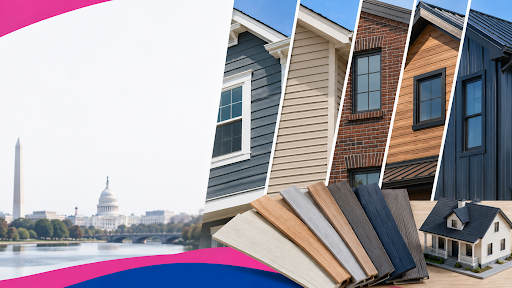
Choosing among the many types of siding available today can feel overwhelming. Each material offers different benefits for durability, appearance, maintenance, and cost. For Washington, DC homes, climate performance should play a major role in the decision.
DC experiences humid summers, freezing winter temperatures, heavy rain, and occasional storms. These conditions make moisture resistance and long-term durability especially important.
Fiber Cement Siding
Fiber cement combines cement, sand, and cellulose fibers into a highly durable product. Brands like James Hardie have made this material one of the most popular choices for homeowners seeking long-term value.
Benefits include:
- Excellent moisture resistance
- Strong weather resistance
- Low maintenance requirements
- High-end appearance
- Long lifespan
Many DC homeowners choose fiber cement because it handles humidity better than traditional wood siding.
Vinyl Siding
Vinyl remains one of the most affordable siding materials available. It comes in many colors, textures, and styles.
Common advantages include:
- Lower installation costs
- Minimal maintenance
- Wide design selection
- Good energy-efficiency options with insulated products
Vinyl works well for budget-conscious homeowners seeking reliable performance.
Brick Veneer and Masonry
Brick has long been a staple across many Washington, DC neighborhoods. Historic areas throughout Georgetown, Capitol Hill, and Shaw showcase brick’s timeless appeal.
Brick siding offers:
- Exceptional durability
- Excellent fire resistance
- Strong resale value
- Minimal maintenance
Its higher upfront cost is often offset by its long lifespan.
Wood Siding
Wood siding delivers natural beauty that many homeowners still prefer.
Popular wood styles include:
- Cedar shakes
- Clapboard siding
- Board and batten
- Engineered wood panels
While attractive, wood requires ongoing maintenance to prevent moisture damage and insect issues.
Engineered Wood and Composite Siding
Engineered products blend wood fibers with advanced resins and protective coatings.
These materials offer:
- Improved moisture management
- Better durability than traditional wood
- Authentic wood appearance
- Lower maintenance needs
Products from manufacturers such as Tando Composites have become increasingly popular for homeowners seeking a balance between appearance and performance.
Metal Siding
Metal siding, including aluminum and steel, appears less frequently on residential properties but can provide excellent durability and weather resistance.
Many modern architectural homes use metal siding to create a clean, contemporary look.
Snippet Answer
What are the best types of siding for Washington, DC homes?
Fiber cement, engineered wood, vinyl, and brick are among the best siding choices for Washington, DC homes. Fiber cement offers superior weather resistance, vinyl provides affordability, brick delivers exceptional durability, and engineered wood balances appearance with low maintenance. The best option depends on your budget, maintenance preferences, and long-term goals.
Siding Comparison Table
| Siding Type | Average Installed Cost | Durability | Maintenance Level | Climate Suitability for DC |
| Fiber Cement | $8-$15/sq. ft. | Excellent | Low | Excellent |
| Vinyl | $4-$12/sq. ft. | Good | Low | Very Good |
| Brick Veneer | $12-$25+/sq. ft. | Excellent | Very Low | Excellent |
| Wood | $8-$18/sq. ft. | Moderate | High | Fair to Good |
| Engineered Wood | $7-$14/sq. ft. | Very Good | Low to Moderate | Very Good |
| Metal | $8-$18/sq. ft. | Very Good | Low | Good |
Costs vary based on home size, material quality, labor rates, removal requirements, and project complexity.
At Pinkney Services, we help homeowners evaluate siding options based on their home’s architecture, neighborhood style, maintenance goals, and budget. Our team performs a thorough assessment before recommending materials that can withstand Washington, DC’s demanding climate while maximizing curb appeal and property value.
Pros & Cons by Material
Understanding the pros and cons of each siding material helps homeowners make a smarter investment. While appearance matters, durability, maintenance, and long-term value often have a bigger impact on overall satisfaction.
At Pinkney Services, we help Washington, DC, homeowners compare materials based on real-world performance, not just showroom samples.
Fiber Cement Siding
Fiber cement remains one of the top choices for homeowners seeking durability and weather resistance.
Pros
- Excellent resistance to moisture and humidity
- Handles DC temperature swings well
- Resistant to pests and rot
- Fire resistant
- Strong curb appeal
- Long lifespan, often 30 to 50 years
Cons
- Higher upfront cost than vinyl
- Heavy material requires professional installation
- Repairs can be more complex
For many homeowners comparing vinyl vs fiber cement siding in DC, fiber cement often wins on longevity and premium appearance.
Vinyl Siding
Vinyl continues to be one of the most popular siding materials due to its affordability.
Pros
- Lower installation cost
- Large selection of colors and styles
- Minimal maintenance
- Does not require painting
- Lightweight and quick to install
Cons
- Can crack during extreme cold
- May fade over time
- Less impact-resistant than fiber cement or brick
- Lower perceived resale value
Vinyl is often a practical option for homeowners focused on budget and low maintenance.
Brick Veneer
Brick offers a classic look that fits many Washington, DC neighborhoods.
Pros
- Extremely durable
- Excellent weather resistance
- Very low maintenance
- Strong resale value
- Fire resistant
Cons
- High installation cost
- Limited design flexibility after installation
- Repairs may require specialized masonry work
Wood Siding
Wood delivers natural warmth and character that synthetic products often try to replicate.
Pros
- Beautiful natural appearance
- Customizable with paint or stain
- Strong architectural appeal
- Suitable for historic homes
Cons
- Requires frequent maintenance
- Vulnerable to moisture damage
- Susceptible to insects
- Higher long-term upkeep costs
Engineered Wood Siding
Engineered wood combines the appearance of real wood with improved performance.
Pros
- More moisture-resistant than traditional wood
- Lower maintenance requirements
- Attractive wood-grain appearance
- Often more affordable than fiber cement
- Easier installation
Cons
- Quality varies by manufacturer
- Can still experience moisture issues if improperly installed
- Lifespan may be shorter than that of fiber cement
Which Material Delivers the Best Overall Value?
For most Washington, DC homes, fiber cement and engineered wood offer the strongest combination of durability, weather resistance, energy efficiency, curb appeal, and resale value.
However, every property is different. A historic row house in Georgetown may benefit from different siding materials than a modern home in Shaw or LeDroit Park.
That is why Pinkney Services begins every siding project with a detailed inspection and hidden-damage assessment. Our experienced team helps homeowners compare materials, understand long-term ownership costs, and select siding that performs well in the DC climate while matching the home’s style and budget.
Regional Suitability & Climate Considerations
Choosing the best siding for the Washington, DC, climate requires more than comparing colors and prices. DC experiences hot, humid summers, freezing winter temperatures, heavy rainfall, and occasional severe storms. Your siding must handle all of them.
Moisture management is often the biggest concern. High humidity can trap moisture behind siding, leading to mold, rot, and structural damage if materials or installation methods are inadequate.
Fiber Cement Performs Well in DC Weather
Fiber cement is one of the strongest performers in the region because it resists:
- Moisture intrusion
- Rot and decay
- Insect damage
- Temperature-related expansion and contraction
Many homeowners choose fiber cement because it provides excellent weather resistance throughout all four seasons.
For additional product information, visit James Hardie.
Vinyl Handles Humidity but Has Limits
Vinyl siding performs well in humid conditions because it does not absorb water.
However, prolonged sun exposure and temperature fluctuations can cause:
- Fading
- Warping in lower-quality products
- Cracking during severe cold snaps
Premium insulated vinyl products typically perform better in DC’s climate than entry-level options.
Brick Excels in Long-Term Weather Protection
Brick has protected Washington, DC homes for generations.
Its benefits include:
- Excellent moisture resistance
- Superior durability
- Strong wind resistance
- Long service life
Many historic neighborhoods continue to rely on brick because it withstands decades of weather exposure with minimal upkeep.
Wood Requires More Climate Protection
Traditional wood siding faces greater challenges in DC’s environment.
Humidity can cause:
- Swelling
- Rot
- Peeling paint
- Mold growth
Wood can still perform well when properly maintained, but homeowners should expect more frequent inspections and refinishing.
Engineered Wood Offers a Middle Ground
Engineered wood products are designed to improve moisture resistance while maintaining the appearance of natural wood.
When installed correctly, they offer:
- Better moisture protection than traditional wood
- Good energy efficiency
- Improved durability
- Attractive curb appeal
Local Installation Matters as Much as Material
Even the highest-quality siding can fail if installation is poor.
Proper flashing, drainage systems, house wrap installation, and ventilation all play critical roles in protecting DC homes from moisture damage.
At Pinkney Services, our team evaluates each home’s exposure, drainage conditions, architectural style, and neighborhood requirements before recommending a siding solution. This project-specific approach helps homeowners maximize durability, energy efficiency, and long-term performance in Washington, DC’s demanding climate.
Cost Breakdown: What Siding Costs in Washington, DC
For most homeowners, siding cost plays a major role in the decision-making process. At the same time, upfront pricing matters; long-term value, maintenance expenses, and potential resale benefits should also factor into your budget.
The average siding cost per square foot DC homeowners can expect varies by material, labor requirements, and project complexity.
Average Installed Siding Costs
| Siding Material | Average Installed Cost Per Sq. Ft. |
| Vinyl | $4-$12 |
| Engineered Wood | $7-$14 |
| Fiber Cement | $8-$15 |
| Wood | $8-$18 |
| Metal | $8-$18 |
| Brick Veneer | $12-$25+ |
These figures typically include materials and professional installation but may not include removal of existing siding, structural repairs, or custom trim work.
Factors That Affect Siding Costs
Several variables influence the final project price:
- Home size and square footage
- Number of stories
- Existing siding removal
- Hidden moisture or structural damage
- Material selection
- Architectural complexity
- Permit requirements
- Labor costs in the DC market
At Pinkney Services, every siding project begins with a detailed inspection to identify issues that could affect pricing before construction begins.
Upfront Cost vs. Long-Term Value
The least expensive siding option is not always the most affordable over time.
For example:
- Vinyl typically has the lowest initial investment.
- Fiber cement often provides stronger durability and resale value.
- Brick requires a larger upfront budget but may last for generations.
- Engineered wood balances affordability and performance.
Resale Value and Return on Investment
New siding can improve curb appeal and increase buyer confidence during resale.
According to the annual Cost vs. Value Report, exterior replacement projects consistently rank among the highest-return home improvements. Homeowners can see cost recoup data here.
Maintenance & Durability
When comparing the types of siding available for Washington, DC homes, maintenance requirements can have a major impact on long-term ownership costs.
Fiber Cement
- Lifespan of 30 to 50+ years
- Resistant to rot and insects
- Minimal upkeep requirements
- Excellent weather resistance
Vinyl
For homeowners seeking low-maintenance siding options in DC, vinyl remains a popular choice.
Maintenance typically includes:
- Annual cleaning
- Storm inspections
- Occasional panel replacement
Brick
Brick offers exceptional durability and can last for decades with minimal intervention.
Common maintenance tasks include:
- Inspecting mortar joints
- Addressing occasional masonry repairs
- Cleaning surface stains
Wood
Wood requires the most upkeep.
Homeowners should expect:
- Regular painting or staining
- Moisture inspections
- Pest monitoring
- Periodic repairs
Engineered Wood
Engineered wood offers:
- Improved moisture resistance
- Reduced maintenance needs
- Strong curb appeal
- Better durability than traditional wood
For homeowners planning broader upgrades, new siding can also complement other Energy-Efficient Home Improvements that improve comfort and reduce utility costs year-round.
Installation & DIY Potential
Siding installation affects performance just as much as material selection.
Vinyl Siding
Vinyl is often the most DIY-friendly option because it is:
- Lightweight
- Easy to cut
- Faster to install
- Budget-friendly
Engineered Wood
Engineered wood requires more precision, especially around:
- Sealing
- Flashing
- Drainage gaps
- Moisture protection
Fiber Cement
Fiber cement installation is best left to professionals because of:
- Heavy material weight
- Specialized cutting tools
- Detailed fastening requirements
- Moisture management systems
Brick and Masonry
Brick veneer installation requires masonry expertise and specialized equipment.
Why Professional Installation Matters
Professional installers understand:
- DC permitting requirements
- Moisture management
- Building envelope protection
- Manufacturer warranty standards
Learn more about how to install siding from This Old House.
Insurance & Warranty Considerations
Siding is a major investment, so understanding insurance coverage and warranty protection is important.
What Homeowners Insurance Typically Covers
Many policies may cover damage caused by:
- Wind
- Hail
- Fire
- Falling trees
- Vandalism
Homeowners can compare insurance coverage here.
Understanding Siding Warranties
Warranty coverage may include:
- Product defects
- Material performance
- Color fade protection
- Manufacturing flaws
Many premium products offer warranties ranging from 20 years to limited lifetime coverage.
Installation Can Affect Warranty Protection
Improper installation may reduce warranty coverage. This is one reason many homeowners choose experienced contractors familiar with manufacturer requirements.
How to Choose the Right Siding for Your DC Home
If you’re wondering how to choose siding for DC home projects, start by evaluating your priorities. The best siding is not always the most expensive. It is the one that fits your budget, maintenance expectations, architectural style, and long-term goals.
At Pinkney Services, we guide homeowners through this process every day.
Step 1: Consider Your Budget
Start with a realistic project budget.
General pricing tiers include:
- Budget-friendly: Vinyl
- Mid-range: Engineered wood
- Premium: Fiber cement
- High-end: Brick veneer
Remember to compare lifetime ownership costs, not just installation costs.
Step 2: Evaluate DC Climate Performance
Washington, DC’s climate places constant stress on exterior materials.
Ask:
- Does the material resist moisture?
- Can it handle temperature swings?
- Will it perform well during heavy rain?
- Is it suitable for long-term weather exposure?
Fiber cement, brick, and engineered wood typically perform best in local conditions.
Step 3: Think About Maintenance
Be honest about how much upkeep you want.
Choose:
Vinyl for minimal maintenance
Fiber cement for low maintenance and durability
Brick for extremely low upkeep
Wood, if you are comfortable with ongoing maintenance
Step 4: Match Your Home’s Architecture
Your siding should complement your home’s design.
Examples include:
- Historic row homes: Brick or premium fiber cement
- Traditional homes: Fiber cement or engineered wood
- Modern homes: Metal, composite, or fiber cement
- Budget-conscious renovations: Vinyl or engineered wood
Step 5: Consider Long-Term Value
Ask yourself:
- Will this improve curb appeal?
- Does it increase resale value?
- How long will it last?
- What are future maintenance costs?
Often, investing slightly more upfront can reduce long-term expenses.
Quick Siding Selection Checklist
Before making a final decision, review this checklist:
- □ Establish your budget
- □ Compare climate performance
- □ Evaluate maintenance requirements
- □ Review expected lifespan
- □ Consider energy efficiency
- □ Assess curb appeal goals
- □ Check warranty coverage
- □ Hire a qualified installer
- □ Request multiple estimates
- □ Schedule a professional inspection
Frequently Asked Questions
Which siding handles DC humidity best?
Fiber cement and brick are generally the best performers in Washington, DC’s humid climate. Both materials resist moisture damage, rot, and mold growth better than traditional wood siding.
Engineered wood also performs well when properly installed and maintained. Vinyl resists moisture absorption but may experience expansion and contraction during temperature fluctuations.
For homeowners seeking the best siding for the Washington, DC, climate, fiber cement is often one of the safest long-term investments due to its durability and weather resistance.
Are there DC building codes for siding?
Yes. Siding projects in Washington, DC may be subject to local building codes, permitting requirements, zoning regulations, and historic district guidelines.
Requirements can vary depending on:
- Property location
- Historic preservation restrictions
- Structural modifications
- Fire-resistance standards
- Energy code compliance
Homes located in historic neighborhoods may face additional material and design restrictions. Before beginning a siding project, homeowners should verify current requirements with local authorities and qualified contractors familiar with DC regulations.
What’s the Average Siding Cost in DC?
The average siding cost per square foot that DC homeowners can expect ranges from approximately $4 to $25+ per square foot installed, depending on the material selected.
| Material | Average Installed Cost |
| Vinyl | $4-$12/sq. ft. |
| Engineered Wood | $7-$14/sq. ft. |
| Fiber Cement | $8-$15/sq. ft. |
| Wood | $8-$18/sq. ft. |
| Brick Veneer | $12-$25+/sq. ft. |
Final pricing depends on home size, labor requirements, existing siding removal, repairs, and project complexity.
Which Siding Requires the Least Maintenance?
Brick and vinyl are among the most popular low-maintenance siding options DC homeowners choose.
Both require minimal upkeep beyond occasional cleaning and inspections. Fiber cement also offers relatively low maintenance while providing superior durability and weather protection.
Traditional wood siding typically requires the most maintenance due to painting, staining, and moisture protection needs.
Is Fiber Cement Better Than Vinyl Siding in DC?
When comparing vinyl vs fiber cement siding in DC, fiber cement generally provides better durability, weather resistance, impact resistance, and long-term value.
Vinyl offers lower upfront costs and simpler maintenance, making it attractive for budget-conscious homeowners. Fiber cement usually delivers stronger performance in DC’s climate and often contributes more to long-term curb appeal and resale value.
The best choice depends on your budget, maintenance preferences, and how long you plan to stay in the home.
Ready to Upgrade Your Home’s Exterior?
Choosing the right siding comes down to balancing cost, durability, maintenance, and climate performance. Whether you prefer fiber cement, vinyl, brick, or engineered wood, selecting the right material can improve curb appeal, energy efficiency, and long-term value.
Pinkney Services has helped Washington, DC homeowners make confident renovation decisions since 2012. Led by founder Antoinette Pinkney, who brings more than 25 years of construction experience, our team delivers expert guidance, premium craftsmanship, and professional siding installation tailored to your home’s needs.
Pinkney Services
(202) 681-5575
https://pinkneyservices.com
200 Massachusetts Ave NW, Washington, DC 20001
Pinkney Services | Where Vision Meets Craftsmanship